Project Overview
A retail business came to me in crisis: revenue had collapsed by nearly 90% over 12 months, yet leadership couldn't pinpoint why. The raw data existed, sales figures, transaction logs, customer records, but nobody had connected the dots into a clear picture using the right retail performance metrics.
My task was to build a comprehensive Power BI dashboard that would not only surface what was happening, but explain why it was happening and what to do about it by tracking the important measures of retail performance that actually drive business growth. This project demonstrates exactly what I do: transform messy business data into a clear, actionable story using retail industry metrics that matter.
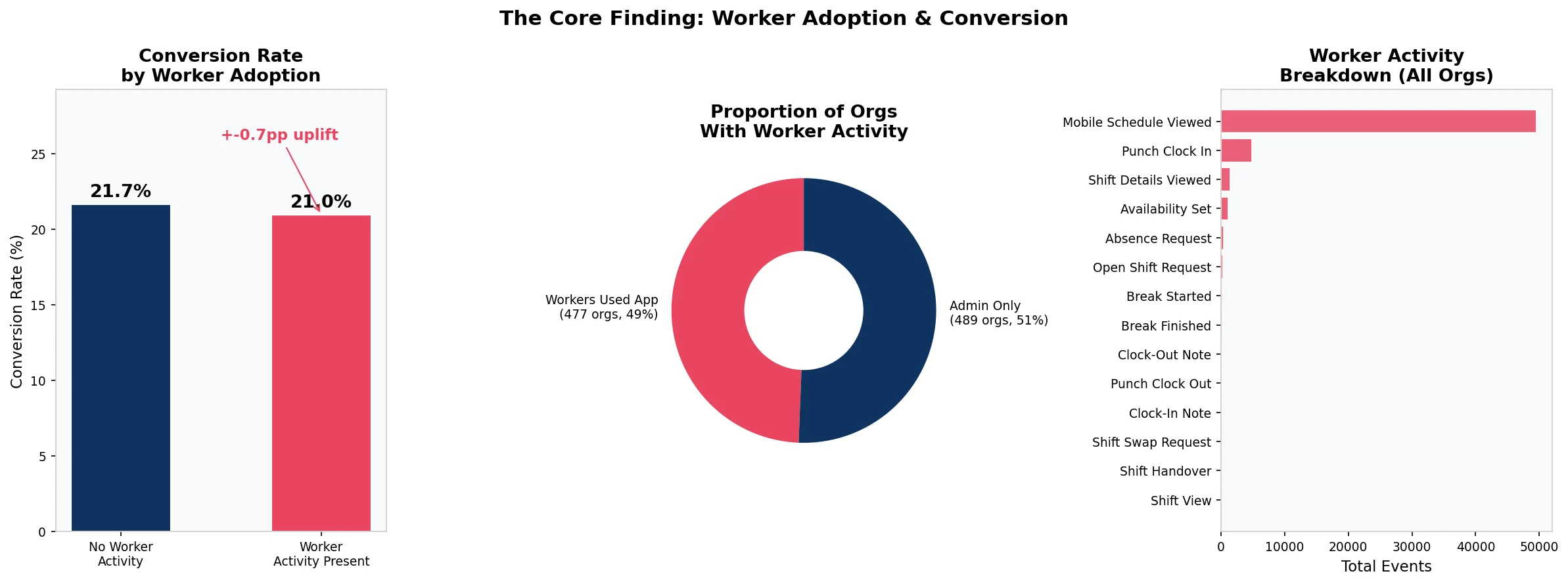
Key finding: The revenue collapse was almost entirely driven by an 85% drop in repeat customer retention, one of the most critical key success factors in retail industry. Customers were buying once and never returning, while the business kept spending on acquisition. Fixing the leak required finding it first through systematic tracking of retail metrics for business growth.
Business Problem
The business was in firefighting mode. Leadership had tried increasing ad spend, launching promotions, and onboarding new product lines, yet revenue kept declining. Without a clear diagnosis using the right retail store metrics, every intervention was a guess.
The data held answers to critical questions the team couldn't answer on their own, questions that align with the key success factors in retail industry:
- Was the decline driven by fewer new customers, or fewer returning ones? (Customer retention is a core retail performance metric)
- Which product categories were losing traction, and which were still healthy? (Category performance is an important measure of retail performance)
- Was there a geographic concentration to the losses? (Location analytics inform retail store success factors)
- At what point in the customer journey were people disengaging? (Journey mapping is essential for tracking retail metrics business growth)
- Were seasonal patterns masking or amplifying the underlying trend? (Time-series analysis of retail industry metrics)
The challenge wasn't purely technical, it was diagnostic. Building the right dashboard meant first understanding which metrics in retail, if answered, would actually change what the business decided to do next.
Dataset
The analysis was built on the client's historical transactional and customer records, structured across several related tables and connected into a star schema model designed to track essential retail performance metrics:
- Sales transactions, order dates, quantities, product IDs, and associated store IDs (foundation for revenue and conversion retail store metrics)
- Customer records, anonymized demographic data, acquisition dates, and geographic location (critical for CLV and retention retail industry metrics)
- Product catalog, categories, subcategories, unit prices, and margins (enables category-level important measures of retail performance)
- Store data, location, opening date, and channel type (online vs. physical) (supports location-based retail store success factors analysis)
- Calendar table, built in DAX to enable time intelligence across all report pages (essential for trend analysis in tracking retail metrics business growth)
The datasets required significant cleaning in Power Query before modeling: date formats were inconsistent across stores, several customer IDs had duplicates from system migrations, and the product hierarchy needed rebuilding from flat CSV exports, all common challenges when implementing retail performance metrics tracking.
Methodology: Tracking Retail Metrics for Business Growth
The project followed a structured diagnostic workflow focused on the key success factors in retail industry, from raw data to root cause:
Data Profiling & Quality Assessment
Column profiling in Power Query revealed missing values, duplicate records, and date inconsistencies. All issues were documented and resolved before any modeling began to ensure retail performance metrics accuracy.
Data Modeling & Relationship Design
A star schema was built with the sales fact table at the center, linked to customer, product, store, and date dimensions. This model powers fast, reliable DAX measures for all critical important measures of retail performance.
DAX Measure Development for Retail KPIs
Core retail industry metrics were defined as reusable DAX measures: total revenue, YoY growth, customer retention rate, cohort repeat purchase rate, average order value, and customer lifetime value proxies, all essential metrics in retail for diagnosing performance.
Retention Cohort Analysis
Customers were segmented by acquisition month and tracked across subsequent periods. This revealed that recent cohorts had dramatically lower return rates, the core finding that explained the revenue collapse and highlighted a critical retail store success factor failure.
Dashboard Design & Storytelling
Visuals were arranged to walk stakeholders through a narrative: overall trend → category breakdown → customer behaviour → root cause → recommendations. The dashboard answers questions about retail performance metrics, it doesn't just display data.
Live Dashboard: Retail Performance Metrics in Action
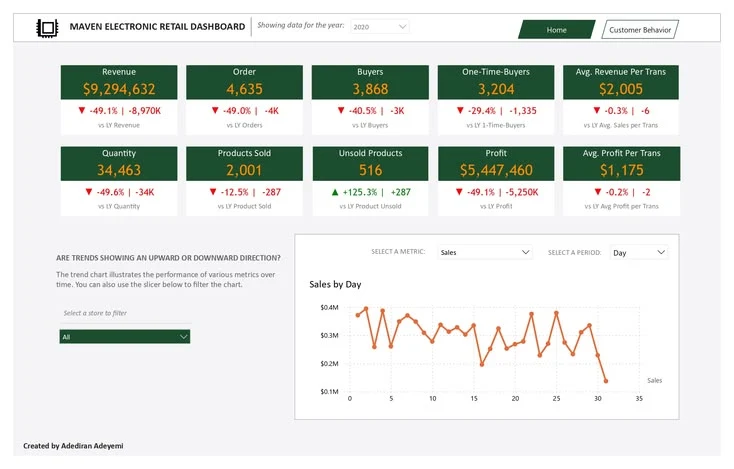
Explore the interactive Power BI dashboard below. Use the slicers to filter by product category, region, or time period to see how different segments contributed to the revenue decline, demonstrating how tracking retail metrics for business growth enables targeted interventions.
The report is organized across three pages: an executive overview of key success factors in retail industry, a customer retention deep-dive with cohort analysis, and a product & category breakdown. Each page is designed to answer a specific business question about important measures of retail performance without requiring the reader to interpret raw figures themselves.
Key Insights: What Retail Performance Metrics Revealed
The analysis surfaced four findings that directly shaped the recovery strategy, all tied to fundamental retail store success factors:
Retention Was the Real Problem
An 85% drop in repeat customer rate was the primary driver, not acquisition. The business was refilling a leaking bucket instead of fixing the leak. This is why customer retention is among the most critical retail performance metrics to track.
Category Performance Was Uneven
Two product categories were still growing while others collapsed. Resources hadn't been reallocated to reflect this, an immediate optimization opportunity. Tracking category-level retail industry metrics enables this insight.
Cohort Decay Accelerated Post-2023
Pre-2023 customers showed healthy return rates. Post-2023 cohorts showed near-zero repeat purchases, pointing to a product, fulfilment, or experience change. Cohort analysis is a powerful method for tracking retail metrics business growth.
Geographic Losses Were Concentrated
Three regions accounted for over 70% of the revenue decline. Targeted regional interventions could stabilize the business faster than a broad approach. Location-based retail store metrics enable this precision.
Tools & Technologies for Retail Performance Metrics
This project was built entirely within the Microsoft BI stack, chosen for its accessibility to the client's finance and operations teams who needed to maintain the retail performance metrics dashboard post-delivery.
Business Impact & Recommendations
The dashboard shifted the conversation from "why is revenue down?" to "here's exactly what to fix and in what order" by making important measures of retail performance visible and actionable. Three tiers of recommendations were delivered:
Immediate Actions (0-30 days)
- Launch a win-back campaign targeting 2023-2024 cohorts who purchased once and never returned (addressing the #1 retail store success factor: retention)
- Investigate what changed in the post-purchase experience after mid-2023, delivery times, product quality, or communication
- Reallocate marketing budget toward the two still-growing product categories (optimizing based on retail industry metrics)
Medium-Term (30-90 days)
- Implement a post-purchase retention sequence (email + SMS) triggered at 14, 30, and 60-day intervals
- Build repeat purchase rate as a weekly leadership KPI to track recovery progress, a core retail performance metric
- Concentrate regional sales efforts on the three highest-decline geographies (using location-based metrics in retail)
Structural Changes
- Shift CAC measurement to include LTV projections, current calculations were ignoring repeat purchase value entirely (a fundamental key success factor in retail industry)
- Set up automated cohort monitoring in Power BI for ongoing visibility without manual reporting, enabling continuous tracking of retail metrics for business growth
Why this matters: Increasing acquisition spend while retention was broken would have accelerated the decline, not reversed it. Data made this visible through retail performance metrics in a way that gut feel couldn't, and fast enough to actually act on it.